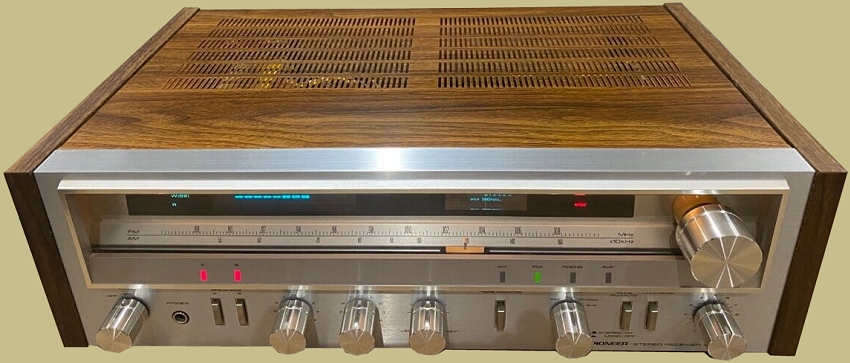
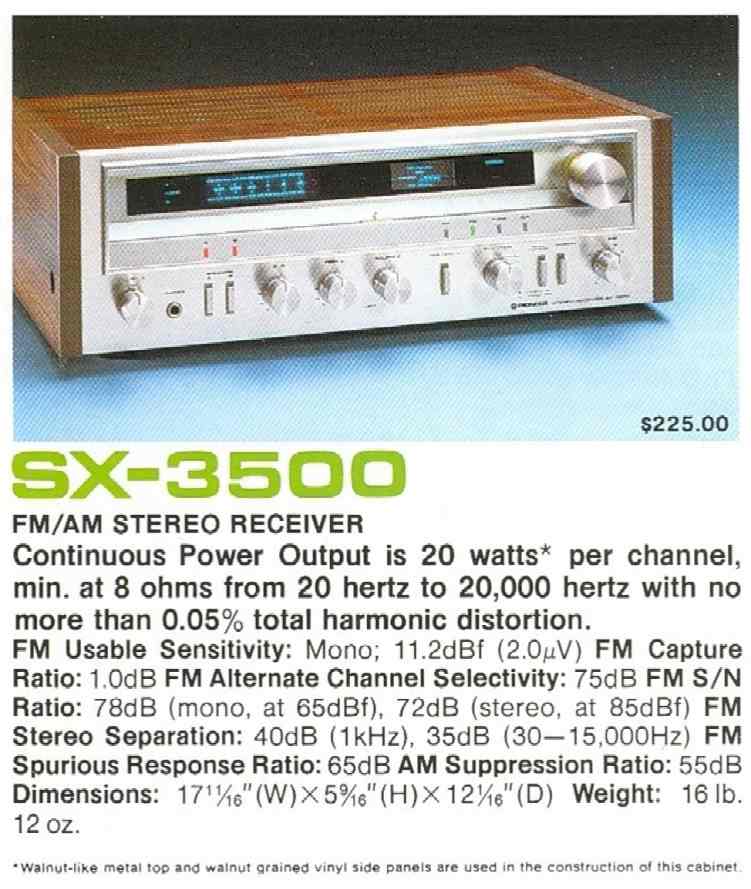
The Pioneer SX-3500 receiver was produced between 1980 and 1982, during Pioneer’s transition away from the heavily built receivers of the late 1970s. It retailed for approximately $225, positioning it as an entry level option in Pioneer’s lineup of the era. The unit delivers 20 watts per channel with remarkably low total harmonic distortion of no more than 0.05%.
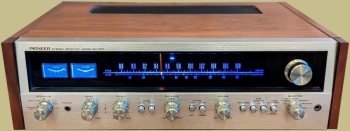
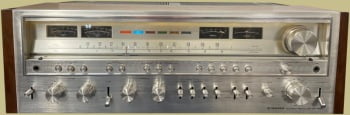
The SX-3400 produced 15 wpc while the SX-3900 produced 120 wpc. Obviously the SX-3400 was at the lower end of the performance spectrum. The models in the SX-3X00 series were:
- SX-3400
- SX-3500
- SX-3600
- SX-3700
- SX-3800
- SX-3900
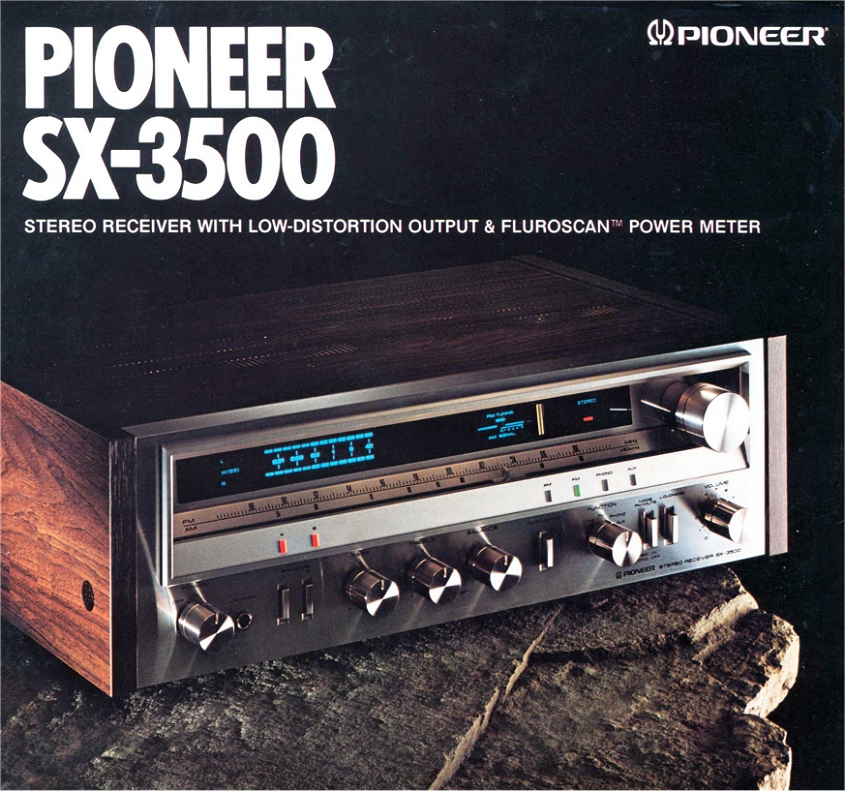
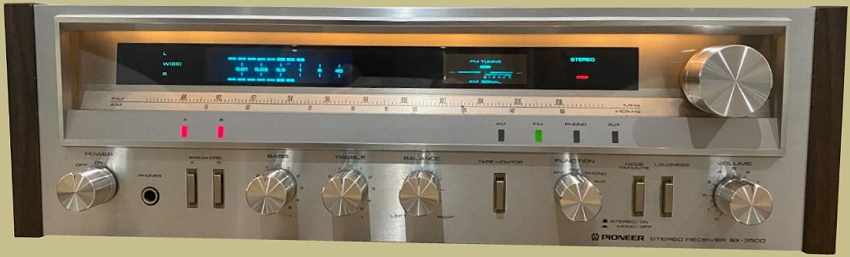
Aesthetically, the SX-3500 features a silver front panel with wooden cabinet side panels and metal top covered in a simulated walnut vinyl. It has Pioneer’s famous Fluroscan display – the distinctive blue fluorescent lights used for the tuning and level indicators, which gave the front panel a sleek, modern glow that set the SX-3X00 series apart from other receivers. The SX-3500 has a practical feature set for everyday listening. While it lacks the muscle of Pioneer’s SX-series giants from the previous decade, the SX-3500 has earned a reputation among vintage audio enthusiasts for its surprisingly clean and refined sound, with performance that punches well above its modest wattage rating.
Front Panel
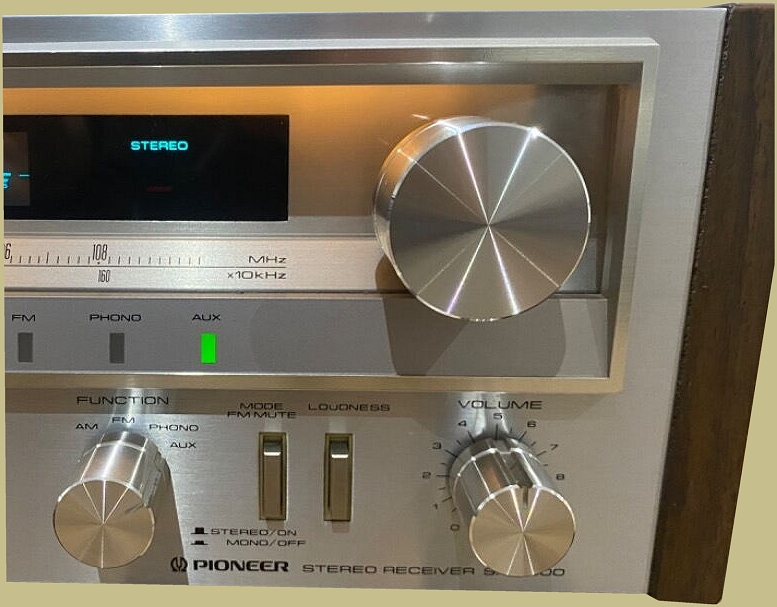
Aside from the obvious power switch and volume control the SX-3500 has a number of other front panel controls.
- Speaker Indicators – Small lights that show which set of speakers is currently active.
- Power Meter – A display that shows how much power is being sent to your speakers.
- Dial Pointer – The needle that points to the radio station you are tuned to on the dial.
- AM/FM Tuning Meter – A meter that helps you fine-tune a radio station. For AM, you want the needle as far right as possible. For FM, you want the needle centered.
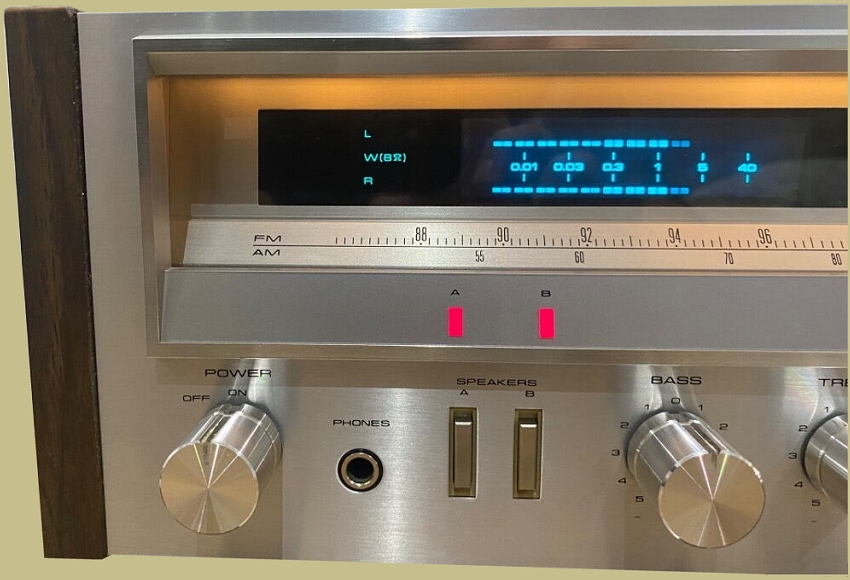
- FM Stereo Indicator – A light that turns on when you are receiving an FM station in stereo.
- Tuning Knob – The knob you turn to change radio stations.
- Function Indicators – Lights that show which input source is currently selected (AM, FM, Phono, or AUX).
- Headphone Jack – Where you plug in your headphones for private listening.
- Speaker Switches – Buttons that let you choose which set of speakers (A, B, or both) plays the sound.
- Bass and Treble Controls – Knobs that adjust the low-end (bass) and high-end (treble) of the sound.
- Balance Control – A knob that adjusts the volume between the left and right speakers.

- Tape Monitor Switch – A button that lets you listen to what is being recorded or played back on your tape deck.
- Function Selector – A switch that lets you choose your audio source — AM radio, FM radio, turntable (PHONO), or an external device (AUX).
- Mode/FM Muting Switch – A switch with two roles: it toggles between stereo and mono sound, and it also turns on or off a noise-suppression feature that quiets the hiss between FM stations.
- Loudness Switch – A button that boosts the bass when you are listening at low volumes, making the sound feel fuller and richer.
Power Amplifier
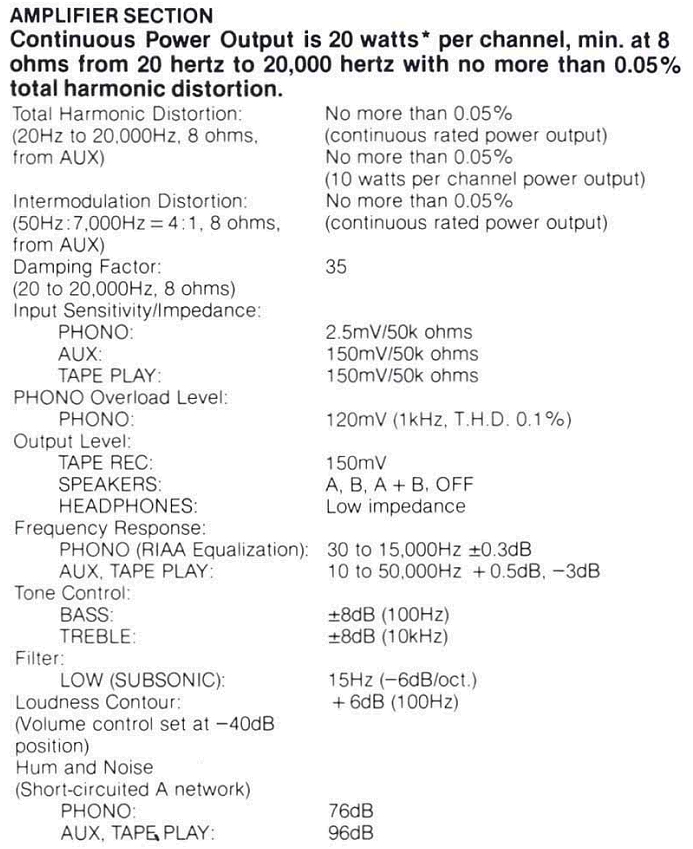
The SX-3500 puts out 20 watts per channel into an 8-ohm load across the full 20 Hz to 20,000 Hz audio range, with total harmonic distortion held to just 0.05%. 20 wpc doesn’t sound like a lot, but Pioneer’s thinking was sound – most living rooms don’t actually need a lot of wattage for comfortable listening levels. What matters more is having power in reserve for sudden dynamic peaks in the music, so the amp never gets pushed into distortion. The SX-3500 was built with that headroom in mind.
Pioneer achieved this with what they called the “Bootstrapped Technique.” The signal starts at a differential input stage, moves through a bootstrapped preamp driver, and finishes at a fully complementary push-pull output stage using two specially selected power transistors per channel. The result is clean, low-distortion power delivery without putting too much stress on the power supply.
Up front, the SX-3500 features Pioneer’s signature Fluroscan meter. Forget the old needle-based VU meter – this is a glowing fluorescent bar-graph display with 12 segments per channel. One IC drives the display, while another handles logarithmic compression of the signal for accurate readings. It responds fast to peaks but decays slowly enough that your eyes can actually track what’s happening. The meter covers a range of 0.01 to 40 watts, referenced to an 8-ohm load. It makes for a cool, functional centerpiece on the front panel.
Here are the specs for the amplifier section:
Stereo FM/AM Tuner
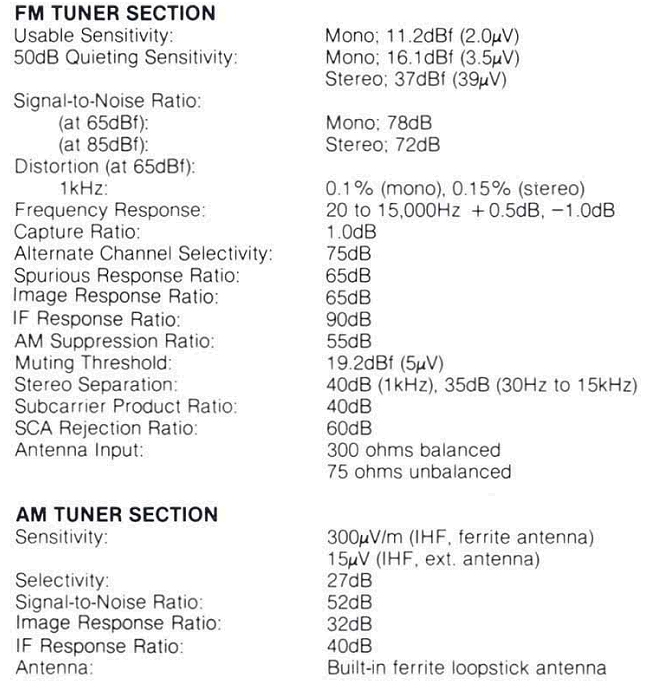
Pioneer built the FM tuner around a solid foundation. The front end uses a junction-type FET amplifier paired with a local oscillator and a 3-gang variable capacitor, giving the tuner the sensitivity it needs to pull in weak stations cleanly. Usable sensitivity is rated at 11.2 dBf, which is good performance for an entry level receiver.
From there, the signal passes through an IF section with two 2-element ceramic filters that strip out noise and interference, leaving only the clean station signal behind. A transistor IF amplifier builds the signal back up before handing it off to the stereo demodulation stage. Pioneer used a proprietary IC here for what they called high-precision decoding and a separate PLL IC handles the actual stereo demodulation, improving channel separation and keeping alignment stable. Any leftover pilot signal is actively filtered out per channel, keeping the final audio output clean. FM stereo separation comes in at 40 dB at 1 kHz, with a signal-to-noise ratio of 72 dB in stereo.
A combination tuning and signal-strength meter on the front panel lets you dial in FM stations to dead center, or monitor AM signal strength. U.S. and Canadian models also include a rear-panel AM stereo output for use with an external adapter.
The AM section is well thought out too, with a built-in ferrite loopstick antenna and an external antenna terminal for better reception when you need it. Sensitivity, selectivity, and image rejection are all good so AM wasn’t be an afterthought on this receiver.
Here are the SX-3500’s tuner specs:
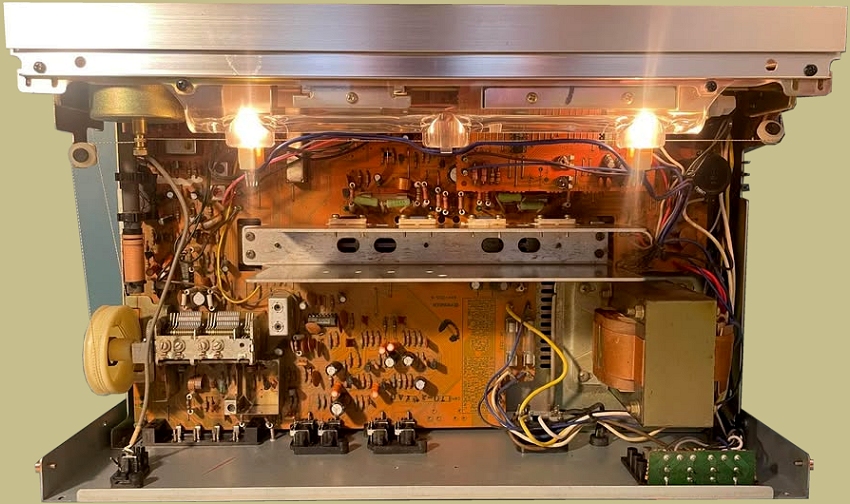
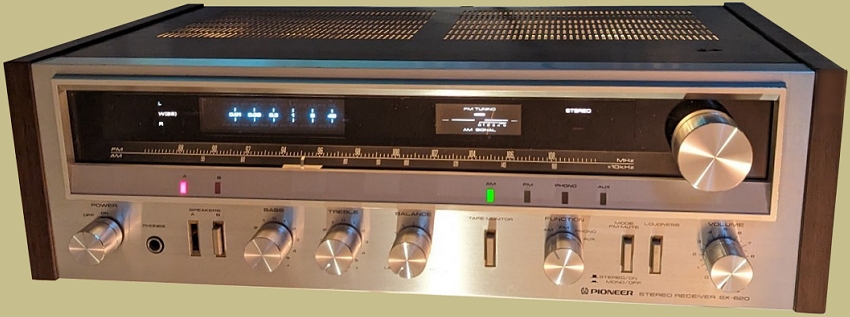
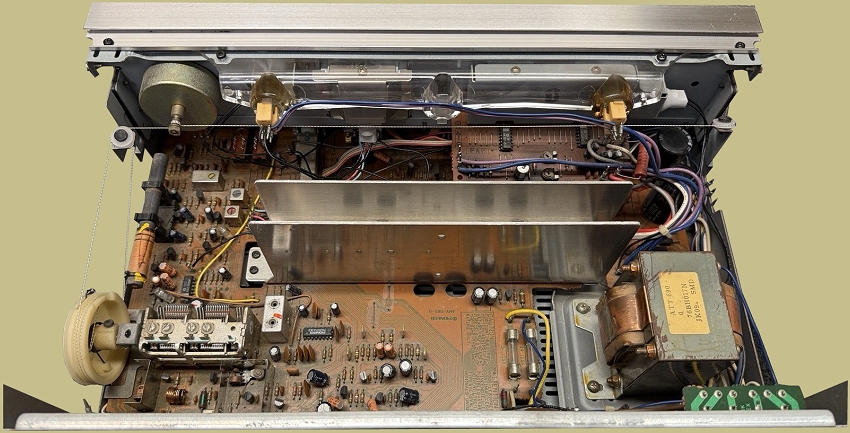
The SX-3500 is basically the same receiver as the Pioneer SX-620 with the exception of a black dial face. The SX-620 was probably sold in Europe or Japan while the SX-3500 was sold in the U.S.
As you can see the inside is the same as well:
Preamp and Controls
For phono playback, Pioneer skipped the easy route of a single integrated circuit and instead used a two-transistor discrete design. The benefit is lower noise. The phono signal-to-noise ratio comes in at 76 dB, which Pioneer rightly pointed out is among the better figures you’d find at this price point at the time. RIAA equalization tracks within ±0.3 dB from 30 Hz to 15 kHz, so your records will sound the way they were meant to.
Tone control uses the same Power NFB approach found in other SX-series receivers. Rather than inserting a separate tone circuit between the preamp and amp stages, Pioneer folded the bass and treble adjustment directly into the power amplifier’s negative feedback loop. It’s an elegant solution and you get ±8 dB of adjustment at 100 Hz and 10 kHz respectively, with minimal added noise or distortion. If your room is a little boomy or bright, you can dial it in without sacrificing sound quality in the process.
The rest of the control section covers all the essentials. There’s a tape monitor switch for recording and dubbing between two decks, a stereo/mono mode switch, LED-indicated source selection for AM, FM, Phono, and AUX, and speaker switching for A, B, both, or off. Loudness and balance controls round things out, and two switched AC outlets on the rear panel are a handy bonus for powering connected components.
Rear Panel
The rear panel of the SX-3500 has all the basic features you’ll need.
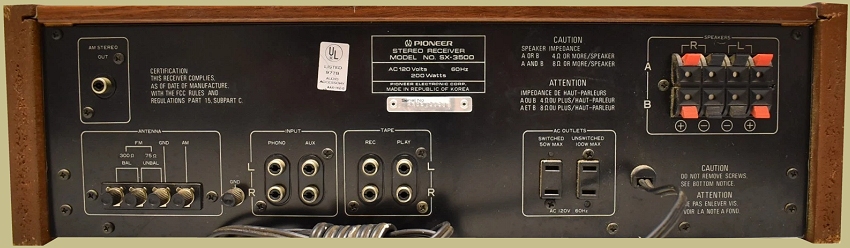
- AM Stereo Output Jack
- Speakers Terminals A
- Speakers Terminals B
- FM Antenna Input Terminals for 300-Ohm Twin-Lead Feeder
- FM Antenna Input Terminals for 75-Ohm Coaxial Cable
- GND Terminal (for antenna)
- AM Antenna Input Terminal
- GND Terminal (for turntable)
- Phono Jacks
- AUX Jacks
- Tape Jacks (REC and PLAY)
- AC Outlets (Switched and Unswitched)
- Power Cord
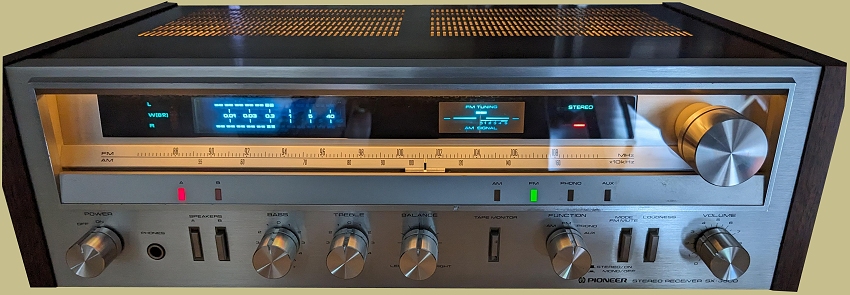
The Pioneer SX-3500 is a practical and affordable entry into vintage hi-fi. These receivers tend to sell for very reasonable prices compared to their more powerful Fluroscan siblings, yet the unit is widely considered underrated at its 20 watts per channel rating. The built-in phono stage for turntable use, the cool silver face plate framed by simulated wood styling, and the Fluroscan meters make it hard to pass up. Add to that the warm, musical sound that Pioneer was known for and the SX-3500 makes a compelling case for itself whenever one turns up at a good price.