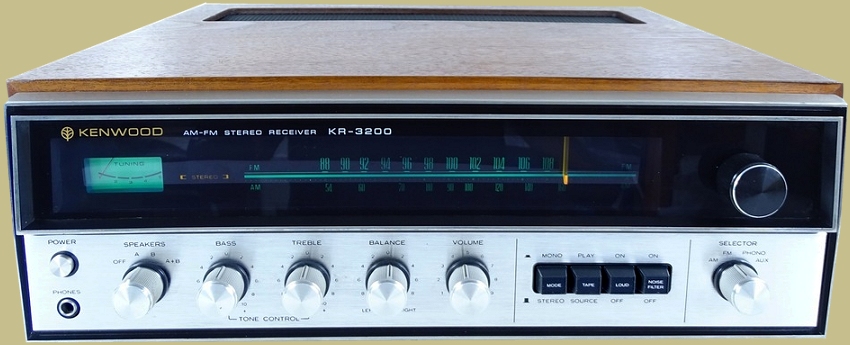
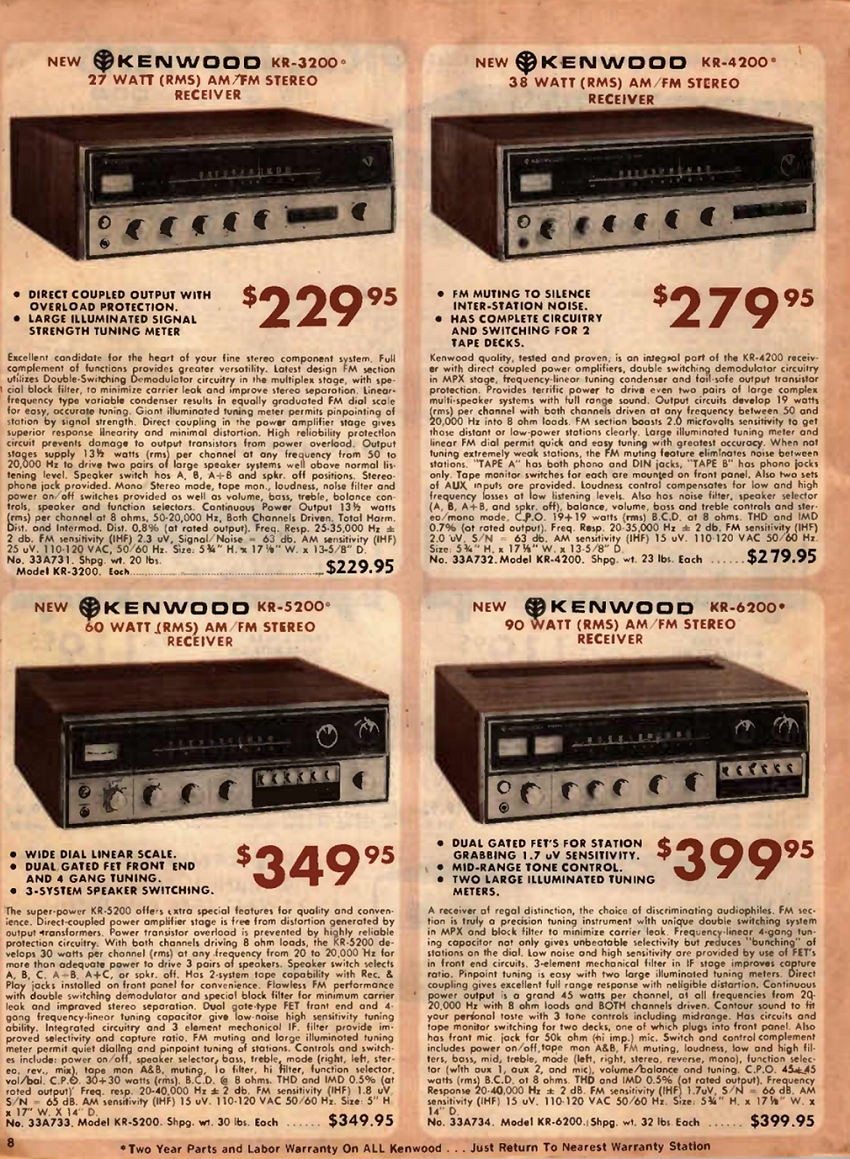
The Kenwood KR-3200 receiver was manufactured from around 1972 to 1974 and retailed for a price of $229.95. It was near the lower end of the Kenwood receiver line up at the time and produced a very modest 13.5 watts per channel. Only the KR-2200 was less powerful with 8 wpc. Even though it was a budget receiver it is very well built and has all the basic features you’d need. Kenwood was known for building receivers at that time. They would usually outperform their rated specs.
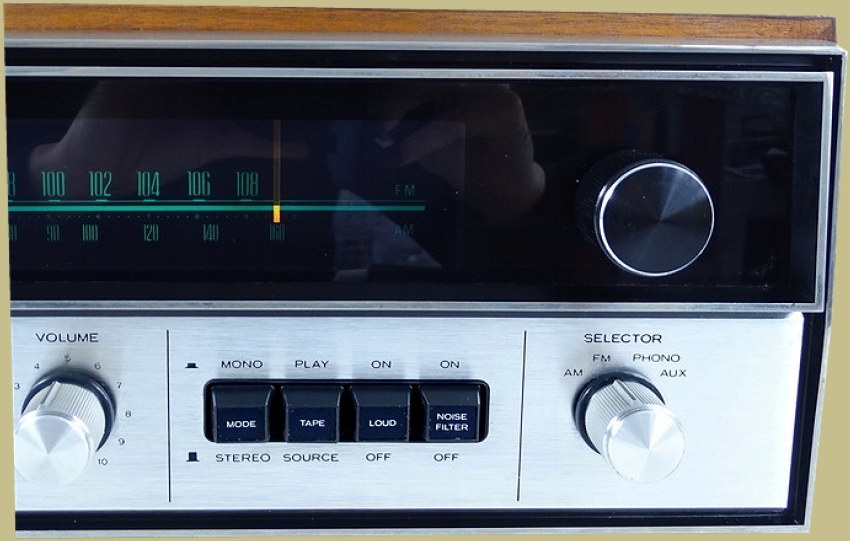
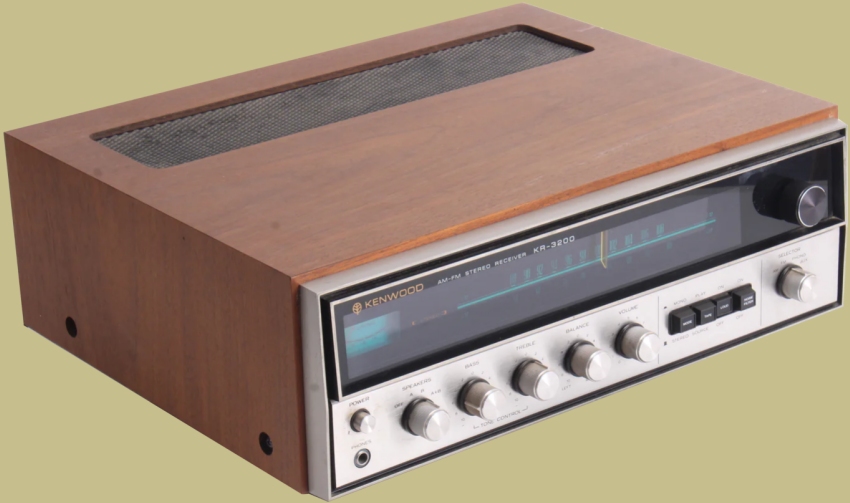
The KR-3200 is also a nice looking receiver with the bottom half of the front panel in brushed aluminum and the top half black with a green backlit dial face and tuning meter. With the wood case it has an appealing vintage look to it.
Front Panel
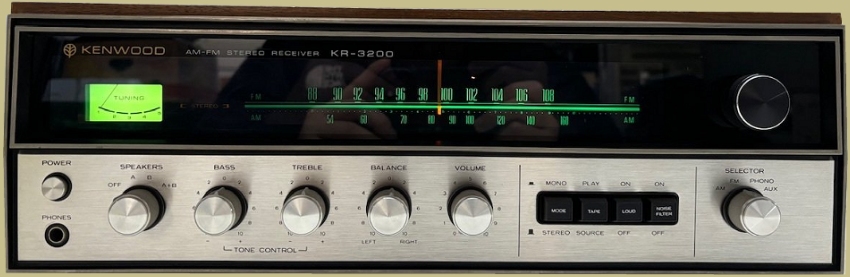
The front panel of the KR-3200 has all the basic controls an entry level receiver should have. At the top left is a signal strength meter and at the bottom left is a headphone jack. The speaker selector switch allows switching from A to B and to A+B. There are tone controls for bass and treble but no mid range. The four pushbuttons at the bottom right control the Mode (stereo or mono), Tape Monitor, Loudness, and a Noise Filter that reduces high frequency noise.
The Bass and Treble tone controls are calibrated in 2dB increments, ranging from +10dB to -10dB.
Tuner
The Kenwood KR-3200 uses a Double-Switching Demodulator in the MPX circuit, which improves stereo separation. The block filter design helps reduce beat interference and intermodulation distortion, resulting in more precise FM de-emphasis performance.
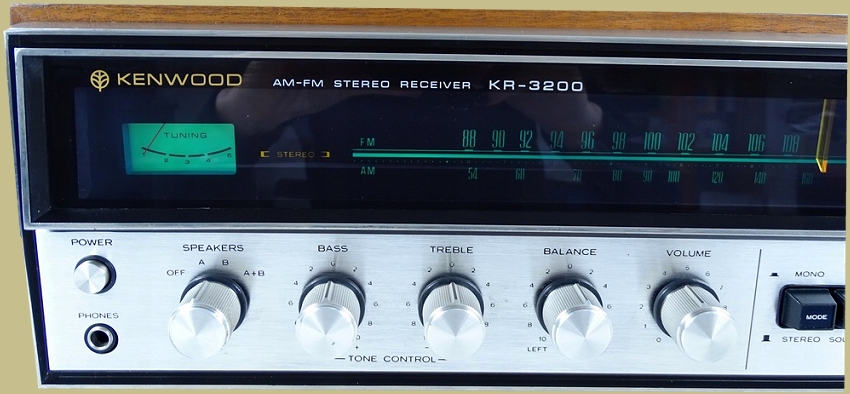
The FM dial uses a linear frequency variable capacitor, providing evenly graduated markings from 88 to 108 MHz. This design allows for more precise and consistent tuning across the entire frequency range.
A large Signal Strength Meter makes it easy to find and optimize radio station reception.
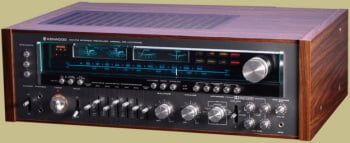
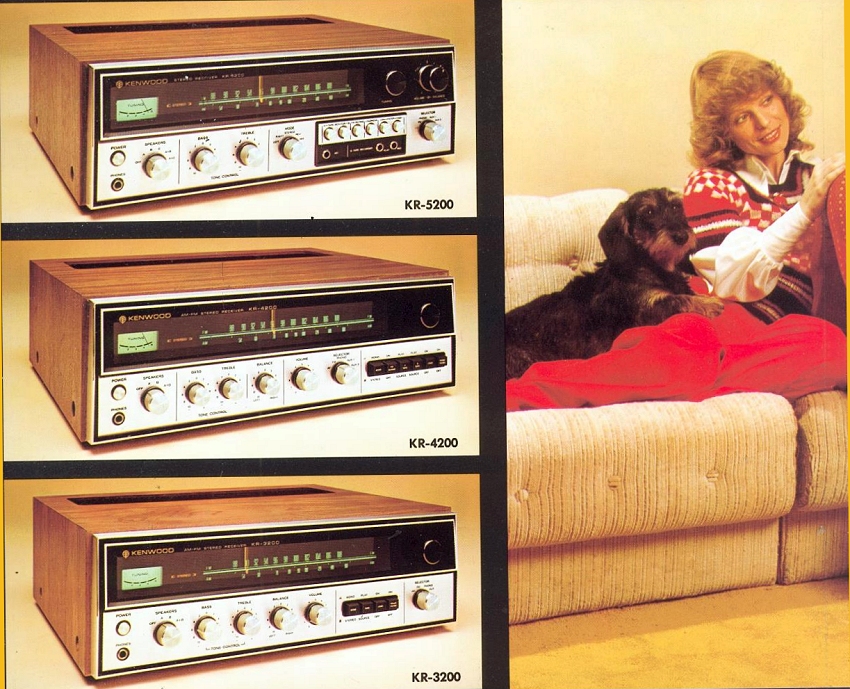
Here are some of the other Kenwood receivers in the KR-x200 lineup.
Preamplifier
Kenwood implemented PNP silicon low-noise transistors in the preamp stage, which contributes to lower noise levels and improved circuit reliability.
Power Amplifier
The power amplifier section produces a wide, flat frequency response, delivering clear stereo sound. The amplifier has a damping factor of 50, which helps to reduce distortion and ensure that the sound is clean and clear. Its damping factor is particularly strong at lower frequencies, which helps control speaker cone movement.
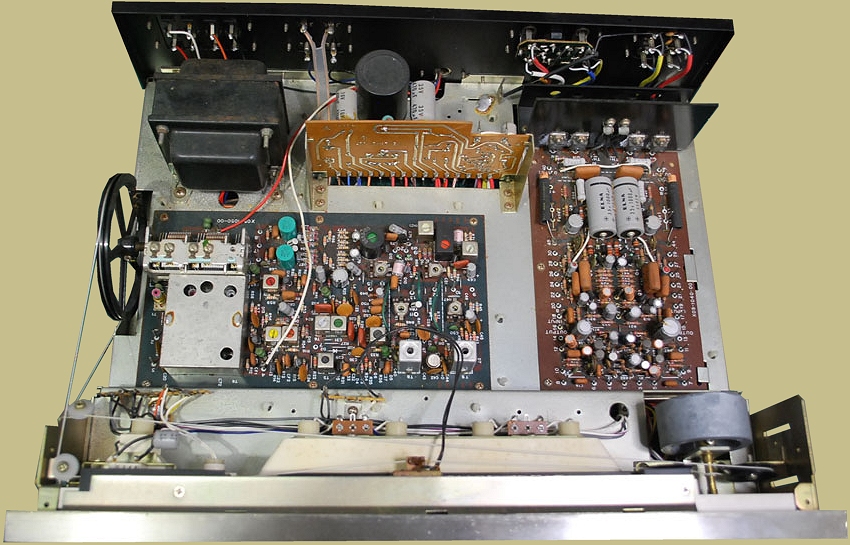
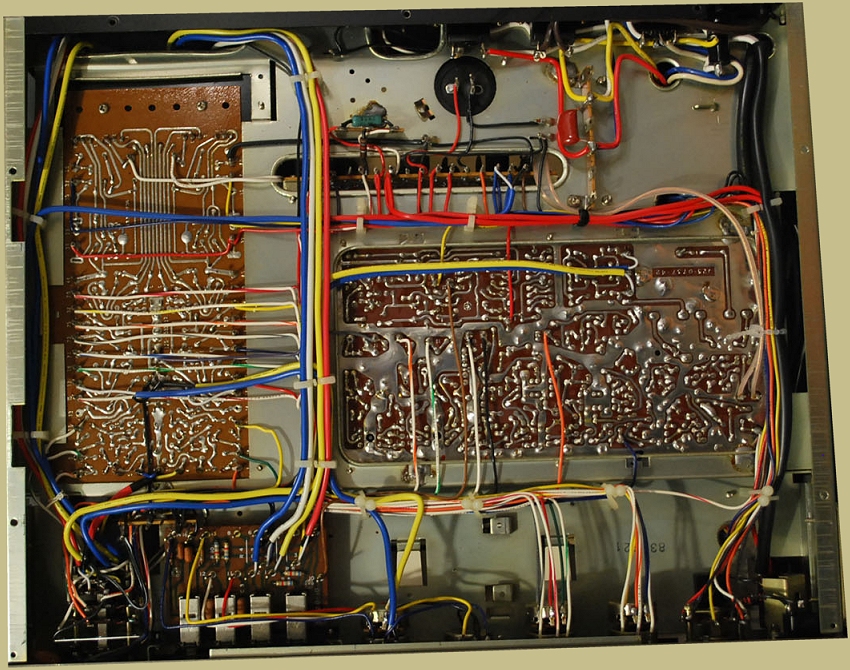
Inside the KR-3200 you can see that it’s clean and well organized. This makes it fairly easy to work on if repairs are needed.
Specifications
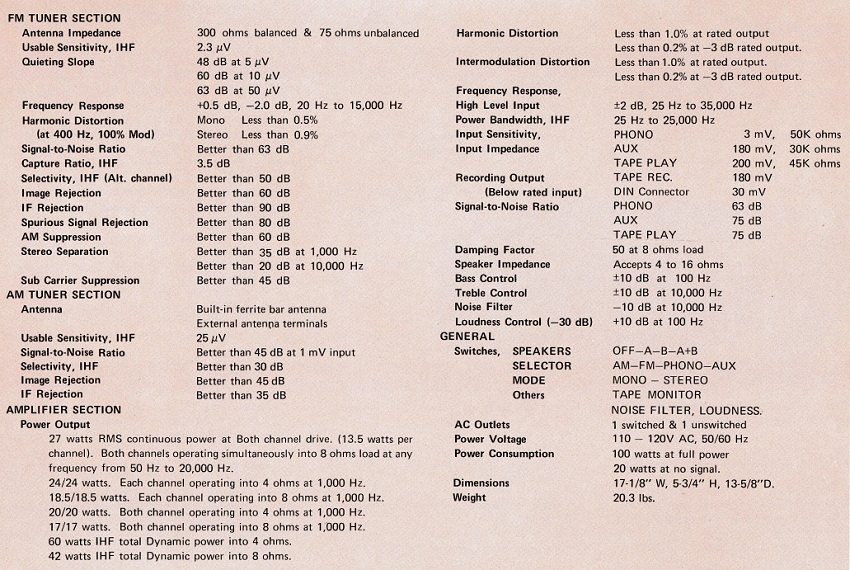
- Power output: 13.5 watts per channel into 8Ω (stereo)
- Frequency response: 25Hz to 35kHz
- Total harmonic distortion: 1%
- Damping factor: 50
- Input sensitivity: 3mV (MM), 180mV (line)
- Signal to noise ratio: 63dB (MM), 75dB (line)
- Output: 180mV (line), 30mV (DIN)
- Speaker load impedance: 4Ω to 16Ω
- Dimensions: 17-1/8 x 5-3/4 x 13-5/8 inches
- Weight: 20.3lbs
- Year: 1972
Apparently dogs enjoy Kenwood receivers as well.
Reviews
“The sound is surprisingly detailed and forward with nice emphasis to the mids.”
“This receiver surprised me. I didn’t expect it to have such good performance. It’s very well made, well designed, and it’s operation is impeccable.”
“This little tuner brings in stations between stations, what a joy to swing that big tuning knob around .”
Rear Panel
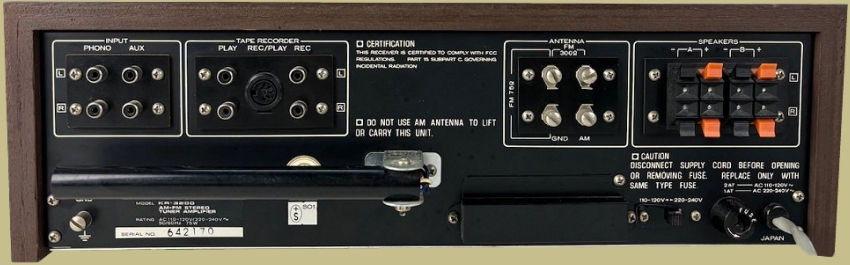
The rear panel has inputs for Phono, Aux, and a Tape deck. There are terminals for two sets of speakers and two outlets, one switched and one un-switched. There is also a 2A fuse at the bottom right of the rear panel so if you’re KR-3200 isn’t powering up be sure to check that first.
Summary
Kenwood’s KR-3200 is a nice little receiver if you’re just starting out with vintage audio. Otherwise it may be lacking a little in both power and features. Nonetheless, it is built exceptionally well, performs well given its capabilities and has enough power for a small room or garage. It has a simple control panel and is certainly not overly complicated. It’s definitely worth picking up if you find one in good condition.